











Dog Nutrition: A Guide to Essential Dog Food Nutrients
written by Dr. Gerardo Perez-Camargo, DVM, Ph.D.
When it comes to feeding your dog well, it’s not just about what’s in the bowl. It’s also about how much, how often, and whether it actually meets their nutritional needs at every stage of life.
This guide breaks down what a complete and balanced dog diet really looks like, based on trusted veterinary frameworks and regulatory standards.
In this article
- What are the 6 macronutrients in dog foods?
- What is a “complete and balanced” dog food?
- Life stage nutrition and special feeding needs
- How much should I feed my dog?
- How often should I feed my dog?
- Fresh dog food vs. raw vs. kibble
- What are the main differences between fresh food and kibble?
- How Freshpet delivers high-quality dog food
- FAQs
What are the 6 macronutrients in dog foods?
According to the Association of American Feed Control Officials (AAFCO), the six basic nutrients for dogs are:
- Water – Maintains hydration, regulates body temperature, and transports nutrients.
- Protein – Supplies amino acids for muscle repair, enzyme production, and hormone function.
- Fats – Provide concentrated energy and support healthy skin, coat, and brain function.
- Carbohydrates and fiber – Offer energy and promote digestive health and gut balance.
- Vitamins – Regulate bodily processes and support growth and metabolism.
- Minerals – Contribute to skeletal strength, immune function, and metabolic health.
These nutrients are essential for growth, repair, energy production, immune defense, and every other basic bodily function.
Water requirements for dogs
Water is the most critical nutrient and is vital for nearly every bodily function:
- Eliminates toxins and waste
- Regulates body temperature
- Transports nutrients
- Lubricates joints
- Aids digestion
Dogs generally require about 1 ounce of water per pound of body weight per day, though needs vary depending on activity level, climate, and diet moisture content. Fresh and high-moisture diets can reduce the amount of water a dog needs to drink.
Protein in dog food
Protein is a fundamental nutrient composed of amino acids. It is crucial for:
- Tissue repair
- Hormone production
- Enzyme function
- Muscle maintenance and immune support
AAFCO protein minimums: 22.5% (puppies), 18% (adults) on a dry matter basis.
Quality matters:
High-quality proteins from animal sources, such as eggs, organ meats, and skeletal meats — have high biological value and digestibility (86–93% = high; over 93% = very high). These proteins also have bioavailability, meaning your dog can absorb and use more of the amino acids in the food.
Fat in dog food
Fats are a concentrated source of energy for dogs and are essential for gut health. They are critical for:
- Fat-soluble vitamin absorption (A, D, E, K).
- Source of essential fatty acids
- Skin and coat health.
- Reducing inflammation.
- Joint health and cognitive support (via omega-3 and omega-6 fatty acids).
AAFCO fat minimums: 8.5% (puppies), 5.5% (adults) on a dry matter basis.
Quality matters:
The type and quality of fats, especially essential fatty acids, are critical for delivering these benefits. Omega-3s help maintain joint mobility, reduce inflammation, and support brain function. Diets with high-quality fat sources provide benefits that go well beyond basic calorie provision, promoting both short-term vitality and long-term well-being.
Fat sources like fish oil and some algal oils are excellent sources of omega 3 fatty acids and essential fatty acids (like alpha-linolenic acid, EPA, and DHA).
Carbohydrates and fiber in dog food
Carbohydrates supply energy for a dog’s daily activities, while fiber supports gut balance. Just some of the many benefits of these nutrients include:
- Carbohydrates provide a fuel source for the body.
- Fibers help maintain a healthy gut microbiome.
- Fibers help with the regularity of bowel movements.
- Fibers help to decrease the energy content of the diet to help in weight maintenance or weight loss.
- Fibers help to improve satiety and maintain a healthy weight.
- Fibers can also help with hairballs in cats.
While not considered an "essential" nutrient, carbohydrates provide energy and can make up a significant portion of a dog's diet, particularly in dry food, where they can contribute up to 60% of calories.
Fiber can be categorized as either:
- Soluble fiber: Feeds beneficial gut bacteria and slows digestion.
- Insoluble fiber: Adds bulk and supports regular bowel movements. Also helps with weight maintenance and hairball prevention in cats.
Both forms of fiber play a distinct role in gut health and satiety, making them important considerations when evaluating a dog’s diet.
Quality matters:
- Adequate fiber promotes satiety, helping control caloric intake and support healthy weight.
- Diets with lower carbohydrate levels and higher-quality fiber often result in better weight management compared to high-carb kibble diets.
Vitamins in dog food
Vitamins are organic compounds that regulate bodily processes, support growth, and enable metabolism. They are either:
- Fat-soluble: Vitamins A, D, E, and K.
- Water-soluble: B-complex vitamins
Each vitamin plays a unique role in keeping essential body systems functioning properly. Maintaining the correct balance is critical – deficiencies can impair health, while excesses, particularly of fat-soluble vitamins, can cause toxicity. Fat-soluble vitamins can accumulate in the body over time, making careful formulation important.
Quality matters:
- Under-supplementation can hinder growth, weaken the immune system, and affect organ function.
- Over-supplementation, especially of Vitamins A and D, can lead to toxicity.
| Vitamin | Key Function | Signs of Deficiency | Signs of Toxicity |
|---|---|---|---|
| Vitamin A | Vision, immune health, skin | Night blindness, poor coat | Bone deformities, joint pain |
| Vitamin D | Calcium absorption, bone health | Rickets, weak bones | Kidney damage, calcification of soft tissues |
| Vitamin E | Antioxidant, cell protection | Muscle weakness, reproductive failure | Rare but may cause bleeding disorders |
| Vitamin K | Blood clotting | Excessive bleeding | Rare; may cause anemia |
| B-Complex | Energy metabolism, nervous system | Poor growth, anemia | Generally low toxicity risk |
Minerals in dog food
Minerals are inorganic compounds essential for bone health, immune function, and metabolic processes. They include:
- Macrominerals: Calcium, phosphorus, potassium, magnesium, sodium, chloride.
- Trace minerals: Iron, copper, manganese, zinc, iodine, selenium.
The balance of certain minerals, especially calcium and phosphorus, is critical for skeletal health. This is particularly important for large breed puppies, as imbalances can cause lifelong orthopedic issues such as hip and elbow dysplasia. The AAFCO limits set the minimum for puppies at 1.2% and the max at 1.8% for large breed puppies with a ratio of 1:1 to 2:1 (calcium:phosphorus).
Quality matters:
- Excess calcium can cause skeletal malformations and reduce the absorption of other minerals like zinc.
- Deficiencies in key trace minerals can impair skin health, growth, and immune function.
- A scientifically formulated diet ensures minerals are provided in optimal amounts and ratios to support both short-term health and long-term development.
| Mineral | Key Function | Signs of Deficiency | Signs of Excess |
|---|---|---|---|
| Calcium | Bone and teeth structure, muscle contraction | Weak bones, fractures | Skeletal malformations, zinc deficiency |
| Phosphorus | Bone structure, energy metabolism | Weakness, poor growth | Bone loss, kidney damage |
| Ca:P Ratio | Supports proper bone development | Imbalance leads to skeletal issues | Ideal: 1:1 to 2:1 |
| Zinc | Skin health, immune function | Hair loss, skin lesions | Vomiting, anemia |
| Copper | Enzyme function, coat color | Poor coat, anemia | Liver damage |
| Selenium | Antioxidant, immune function | Weakness, reproductive failure | Hair loss, neurological damage |
| Manganese | Bone and cartilage development | Joint deformities | Rare but may affect growth |
| Potassium | Muscle and nerve function, fluid balance | Weakness, paralysis | Cardiac arrhythmias |
| Magnesium | Enzyme function, muscle relaxation | Muscle tremors, poor growth | Diarrhea, low blood pressure |
| Sodium | Fluid balance, nerve transmission | Dehydration, muscle cramps | High blood pressure, fluid retention |
| Chloride | Acid-base balance, digestion (stomach acid) | Metabolic alkalosis, poor digestion | Fluid retention, high blood pressure |
| Iron | Hemoglobin formation, oxygen transport | Anemia, weakness | Organ damage, diarrhea |
| Iodine | Thyroid hormone production, metabolism | Goiter, poor growth | Thyroid dysfunction |
What is a ‘complete and balanced’ dog food?
A complete and balanced dog food contains all the necessary nutrients in the correct proportions for a specific life stage, such as growth or maintenance.
This definition is tied to nutrient standards and labeling regulations set by:
- AAFCO (Association of American Feed Control Officials) in the U.S. and Canada.
- FEDIAF (European Pet Food Industry Federation) in Europe.
Both draw on scientific research and are based on data from the NRC (National Research Council).
What nutrient standard should dog foods meet? AAFCO, FEDIAF, or NRC?
Nutrient standards from recognized authorities help ensure that commercial dog foods provide the essential vitamins, minerals, and macronutrients dogs need for each life stage
- AAFCO – A nonprofit that sets uniform definitions, labeling rules, and nutrient profiles for pet food. While it doesn’t regulate or test products directly, most U.S. states adopt AAFCO standards into law.
- FEDIAF – Europe’s counterpart to AAFCO. Its nutrient tables often differ slightly, sometimes setting higher allowances for certain vitamins and minerals, reflecting additional research and a more conservative nutritional approach.
- NRC – A scientific authority, not a regulatory body. Publishes the Nutrient Requirement of Dogs and Cats, which is considered the gold standard by many nutritionists and veterinarians. This publication is the basis for the AAFCO and FEDIAF publications and nutrient profiles.
Despite numerical differences, AAFCO, FEDIAF, and NRC all aim to ensure that a dog’s diet delivers every essential nutrient in the correct amounts for its intended life stage.
While WSAVA does not set nutrient standards, its Global Nutrition Guidelines help veterinarians assess whether a food is formulated and manufactured to high-quality, evidence-based standards.
How foods prove “complete and balanced” status
States often adopt AAFCO’s standards and guidelines when creating their pet food regulations. AAFCO compliance can be achieved through two primary methods:
- Nutrient Formulation: This method involves a laboratory analysis to ensure that the food's recipe contains the required levels of each nutrient. While this approach is often faster and less expensive, it does not inherently prove the bioavailability of nutrients or the food's real-world performance in animals.
- Feeding Trials: This method involves feeding the food to a group of dogs under controlled conditions for a specified period to ensure it supports their health and well-being. This approach provides real-world validation of nutritional adequacy but is more costly and time-consuming due to specific protocols.
Many experts consider NRC’s recommendations to be the gold standard, with AAFCO and FEDIAF functioning as region-specific regulatory baselines.
Life stage nutrition and special feeding needs
A dog's nutritional needs change significantly over its lifetime, requiring different caloric and nutrient profiles at each stage of growth.
Puppies
Puppies require roughly twice the calories per pound of body weight compared to adult dogs due to rapid growth. They also need more protein, fat, and specific minerals to support development.
Large and giant breed puppies have more restrictive nutritional needs, even compared to other puppy breeds sizes. For example, there is narrower limits for calcium levels in the food, to avoid bode malformations.
Additionally, large and giant breeds puppies should not grow as fast as they can to avoid bone malformation. While this might be counter intuitive, slowing their growth means that they will take longer to reach adult weight and size, but they will have well formed bones, instead of bone issues.
Adult dogs
Adult dog's needs are also somewhat variable. This means that depending on the dog's activity level, body weight, spay or neutered status, and other healthy issues the amount of food provided needs to be adjusted to prevent weight gain.
Large vs. small breed dogs
- Large/Giant breeds: Mature more slowly (up to 2 years), requiring careful calcium and phosphorus management during extended growth.
- Small breeds: Reach adulthood sometimes before 1 year of age and often present dental issues later in life due to having a longer life span
Overweight dogs
For an overweight dog, there are many over-the-counter weight maintenance diets and veterinary diets for weight loss.
The main nutritional strategy of these diets is to decrease the amount of fat (since it is the most energy density macronutrient in the food) and increase the fiber (since is the one of the lowest calorie macronutrient in the diet).
There are some challenges that pet parents experience when feeding these diets to dogs. Usually these diets aren't as palatable, which causes food refusals or decreased food intake because of the different flavor and aroma profile of these diets compared to non-specialized dog foods.
Dogs with health conditions
Specialized diets may be necessary for dogs with sensitive stomachs, allergies, or other health concerns.
Additionally, there might be the need to feeding a veterinary diet (prescribed by your dog's veterinarian) to address specific diseases your dog might have.
Senior dogs
Senior dogs are not a life stage currently recognized by AAFCO.
Nutrient density, which is the amount of essential nutrients per calorie, is essential at every life stage. An optimal diet provides the right balance of protein, fats, vitamins, and minerals without overfeeding or underfeeding calories.
How much should I feed my dog?
A dog’s feeding needs depend on weight, activity level, neutered/spayed status, environment the dog is in, and the body condition of the dog.
A good starting point is to follow the recommended feeding guidelines on the back of the package of the dog food. From there, you should watch your dog's weight and if your dog loses weight, you can increase the amount of food by 10% to 20%, if your dog gains weight, you can adjust the amount by 10% less.
Different dogs have different dietary needs. For example, you may need a food that is very high in calories for working dogs, hunting dogs, sled dogs, puppies, or gestating/lactating moms. However, for most dogs, that spend their days deciding if they sleep on the couch or the bed, their energy needs aren't as high and don't need a food that is nutrient dense (especially high calorie foods).
The benefit of foods that aren't calorie dense for these low activity level dogs is that they need to consume higher quantities of food to meet their energy needs. This helps them to feel satiated and decrease the begging behaviors, since their bellies are full.
Some strategies to help these pets is to feed high moisture foods, like wet or fresh foods. These foods are highly palatable and because of their high moisture, they help these pets to feel satiated.
How often should I feed my dog?
Feeding frequency should be adjusted based on a dog’s age, lifestyle, and health, as it impacts digestion, metabolism, and even behavior.
Most adult dogs thrive on two meals per day, spaced 8–12 hours apart. For young puppies, it can be recommended to feed them more meals a day. This is because puppies have a very high energy need to support their growth, and don't have a fully developed stomach.
Puppy feeding schedule (by age)
Because puppies are growing rapidly and have smaller stomachs, they need to eat more often than adult dogs. A feeding schedule helps them get the energy and nutrients they need without overwhelming their digestive system:
- 6–8 weeks: Every 2–3 hours once able to eat mom’s food. It is a common practice to feed mom's food to very young puppies, but the food should be mixed with a lot of water.
- 8 weeks–3 months: Feed the puppy 4 to 5 times a day. This is when the pet parents should start to decrease the amount of water in their puppy's food until no water is added to their food.
- 6–10 months: Transition to 2 meals a day. For large and giant breed puppies it might be beneficial to continue 3 meals a day until they are at least 8 months old.
- 10+ months: 2 meals a day.
Adult dog feeding frequency
Adult dogs usually do well with two meals per day – one in the morning and one in the evening. This routine supports stable energy levels and digestion throughout the day.
- Typical schedule: Two meals per day, morning and evening.
- Large breeds: Two smaller meals are especially important because they can help reduce the risk of gastric dilatation-volvulus (bloat), a serious medical emergency.
Senior dog feeding needs
As dogs age, their nutritional needs and eating habits change. Many senior dogs benefit from diets that are easier to digest and tailored to support joint health, energy balance, and overall well-being.
- Nutrient support: Senior formulas often include higher protein, omega-3 fatty acids, antioxidants, and joint-support supplements such as glucosamine and chondroitin.
- Meal preferences: Older dogs, especially small breeds, may prefer softer foods if they’re missing teeth or have gum sensitivity. Smaller, more frequent meals can also support digestion.
Why a consistent feeding schedule matters
Keeping a regular feeding schedule supports digestive health, weight management, and behavioral stability. Irregular feeding times can lead to stomach upset, and habits like excessive begging. A consistent routine helps regulate metabolism and promotes overall well-being. Routine feeding times also help with routine bathroom breaks, helping pet parents with potty training and house training.
Fresh dog food vs. raw vs. kibble
The choice of feeding format – fresh, raw, or kibble – directly affects a dog’s nutritional intake, and digestibility. Each option comes with unique characteristics, benefits, and trade-offs that pet owners should understand before deciding.
Kibble
Kibble is the most common and widely available dog food format. It is usually made through extrusion, but it can also be made through baking. When extruded, the ingredients are subjected to high temperatures and pressures. When baked, the ingredients are subjected to high temperatures only.
- Pros: Shelf-stable, convenient, widely available, generally lower cost.
- Cons: Kibble can be less palatable than other pet food formats. It might not be the most appropriate food in cases of dogs that have sensitive gums or don't have all their teeth in good condition.
Raw food
Raw diets are made from uncooked, minimally processed whole ingredients like muscle meat, organ meats, and bones.
- Pros: Highly palatable diets.
- Cons: Requires careful handling for food safety reasons. Because the ingredients aren't cooked, if they contain any microorganism (pathogenic or not) it is not killed. These food formats have a shorter shelf life to help ensure food safety.
Fresh food (gently cooked)
Fresh pet foods are cooked foods that should be refrigerated or frozen
- Pros: Highly palatable and easy to chew.
- Cons: Requires refrigeration, and if the food is not consumed in less than 30 minutes it should be disposed of to prevent digestive upsets due to spoilage of microorganisms.
Understanding digestibility and bioavailability in dog food
- Digestibility of the food is measured by estimating how much nutrients were consumed in the food minus how much was eliminated in the poop. For example, if the dog ate 100g of protein and there was 10g of protein in the poop, that means that 90% was digested. Digestibility is usually measured for protein, fat, and energy, and does not measure if the nutrients were absorbed by the animal.
- Bioavailability refers to how much of a nutrient is actually utilized by the dog — meaning digested, absorbed, and put to use.
The use of the amino acids to build muscle, make enzymes, hormones, or neurotransmitters combined with the digestibility and absorption is what we call bioavailability.
Fresh vs. Kibble: Digestibility
| Factor | Fresh/Gently Cooked | Kibble (Extruded) |
|---|---|---|
| Average Digestibility | 80–90%+ | 70–85% |
What are the main differences between fresh food and kibble?
There are obvious differences between these 2 diet formats, but what they mean to you and your dog? Lets dive into some of these differences and what they mean.
Ingredients
Fresh foods are meat base with added fruits, vegetables, animal fats or vegetable oils, vitamins, and minerals.
- Meats, fruits, and vegetables are much more recognizable than the ones present in dry pet foods.
- Dry foods are commonly made from meat meals, vegetable-based meals, animal fats or vegetable oils, vitamins, and minerals.
- These different ingredients can help to deliver different levels of certain nutrients. The differences in ingredients can also help with certain sensitivities and allergies that you dog might have.
How the food is made
Dry Kibble
Dry kibble is usually made through extrusion. In this process, the ingredients are mixes and cooked under pressure using temperatures that vary from 230 to 260 F.
After this cooking step, the food is dehydrated using driers that can reach temperatures of 350 to 400.
Dehydration of the food is important to make the food shelf stable and prevent the growth of spoilage microorganisms. These higher temperatures are known to have a negative impact on certain nutrient like amino acids, fatty acids and certain vitamins.
To prevent their destruction, pet food companies add certain preservatives or synthetic nutrients that are known to be stable at these temperatures. This is done to ensure the pet food is complete and balanced and safe to be fed to pets.
Fresh Foods
Fresh foods are made in a different way. The ingredients are mixed and steam cooked at temperatures ranging from 195 to 210F under high moisture.
Once the food is cooked, it must be quickly refrigerated or frozen to prevent the growth of spoilage microorganisms. These lower processing temperatures and higher moisture levels helps to decrease the degradation of amino acids, fatty acids, and vitamins.
Synthetic vitamins are added to fresh foods to ensure they have all the nutrients the dog needs to live a healthy life.
Because of the lower temperatures and high moisture, fresh foods usually have a much shorter shelf life as compared to dry foods.
Pet parent reported health benefits of fresh dog food
Pet parents often see noticeable improvements after switching to fresh food:
- Shinier coat and softer skin.
- Cleaner teeth and better breath.
- Reduced pickiness at mealtime.
- Healthier weight management.
- Increased energy and vitality.
- Improved stool quality and digestion.
These tangible outcomes show how the fresh food philosophy translates into visible, measurable benefits for a dog’s overall health.
How Freshpet delivers high-quality dog food
Freshpet stands out in the fresh dog food category through a science-first approach supported by experts that formulate the food, control over its own manufacturing facilities, and control over its own fridges. This ensures nutritional integrity, ingredient transparency, and food safety from sourcing the ingredients until pet parents purchase the food.
Expert-led formulation team
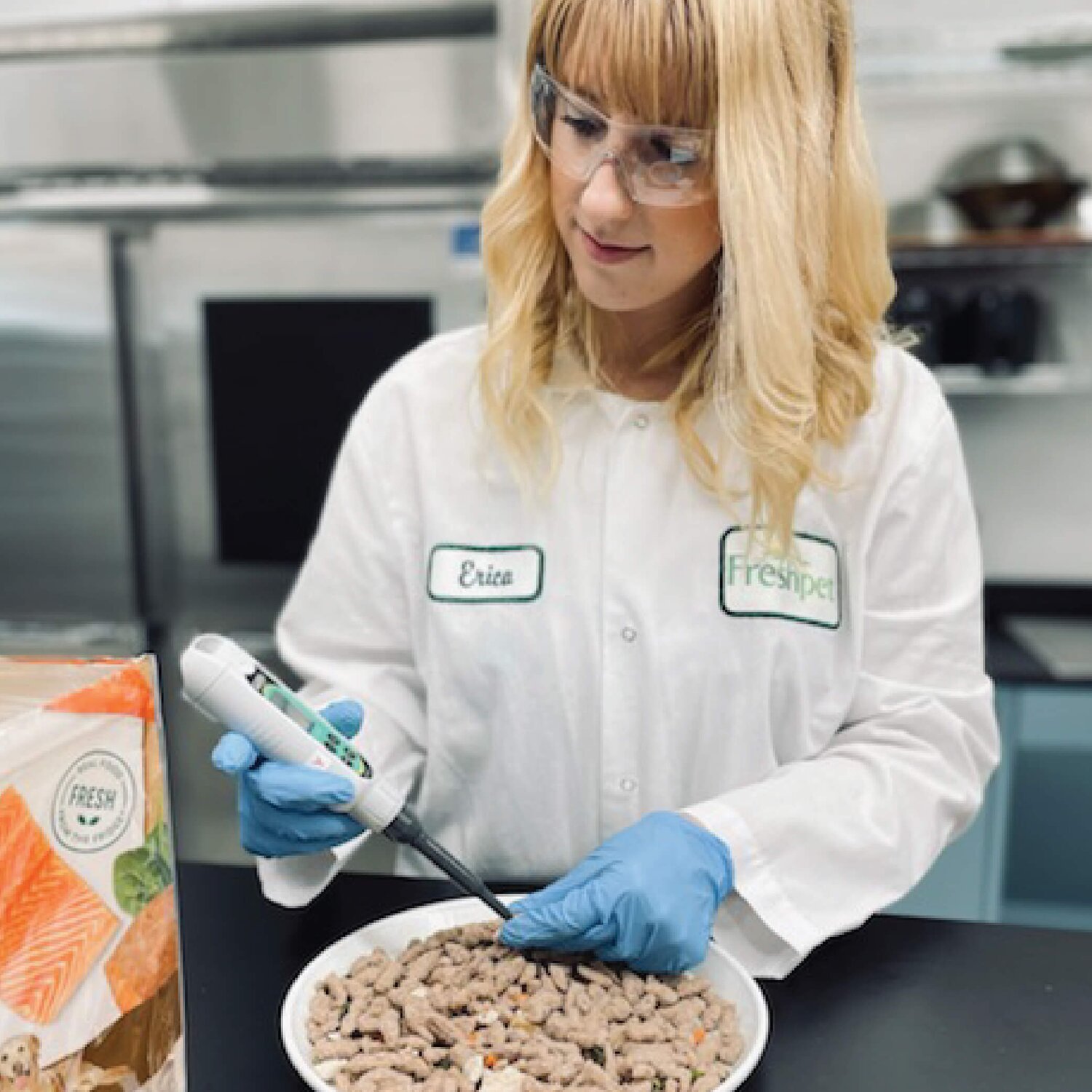
Freshpet’s recipes are created by a highly credentialed team of veterinarians, nutritionists, and food safety specialists, each bringing advanced expertise to fresh food production.
- Dr. Gerardo Pérez-Camargo, DVM, Ph.D. — Head veterinarian and R&D leader, responsible for formulating all recipes.
- Renan Antunes Donadelli, Ph.D. — Animal nutritionist specializing in balanced, evidence-based diets.
- Amanda Dainton, Ph.D. — Expert in canine nutrition research and formulation.
- Anuraj Sukumaran, DVM, Ph.D. — Senior Food Microbiologist ensuring pathogen control and food safety.
- Eden Ephraim, PhD — Director of research and development with expertise in nutrition innovation across pet food, supplements and microbials.
- Lisa Weeth, DVM, DACVIM (Nutrition) — Veterinary nutrition consultant providing specialized nutrition consultations both in-person and via telemedicine for nearly two decades.
Complete in-house manufacturing
By operating its own kitchens, Freshpet controls the entire production process, reducing risks and increasing transparency.
- Full traceability from raw ingredients to final product.
- Strict quality assurance at every stage of production.
- Consistent safety protocols to eliminate risks of contamination or nutritional compromise.
Through expert-led recipe creation and end-to-end production oversight, Freshpet delivers fresh meals pet owners can trust for both safety and quality.
Control over fridges at different stores
Freshpet owns all the fridges with our products. This helps to ensure the food safety of our products. We also have a team to service the fridges to maintain quality standards across all pet food product offerings.
Expert-driven formulation
A specialized team of veterinarians and Ph.D.-level animal nutritionists oversees recipe creation, ensuring each formula meets and surpasses established nutritional standards.
- Recipes are formulated and validated by experts with deep academic and field experience.
- Nutritional science is integrated into every stage of development, from ingredient sourcing to final formulation.
Proof through testing
Science-based nutrition is more than theory; it’s confirmed through controlled testing and real-world feeding trials.
- Digestibility studies ensure nutrients are efficiently broken down and absorbed by the dog’s body.
- AAFCO feeding trials verify that the food supports healthy growth and maintenance beyond paper compliance.
By combining expert formulation with validated testing, science-based dog food delivers proven nutritional benefits pet owners can trust.
FAQs
Can dogs be allergic to certain proteins?
Yes. Although true food allergies in dogs are relatively uncommon, when they occur, they are most often caused by protein in the food. One of the most common is chicken and beef, as these are the most common proteins used in dog foods.
Other proteins like dairy, pork, soybean proteins, and wheat gluten, can also trigger allergic reactions.
In allergic dogs, the immune system mistakenly identifies a protein as harmful, triggering an mild or acute inflammatory response.
Possible symptoms include:
- Itching
- Chronic ear infections
- Gastrointestinal upset
- Skin issues
Identifying the allergen is difficult and can take a long time and a lot of trial and error in some cases. If you suspect your dog is allergic to something, it is best to consult your veterinarian for how to proceed with your dog.
- One of the most common strategies is the elimination diets. The process entails the transition the dog to home-made diets that have very simple and limited amount of ingredients to be able to test different proteins and possibly isolate the allergen.
- In some cases novelty proteins might be helpful for some dogs that present low to mild allergic reactions to these more common proteins. Novel proteins like venison, duck, and rabbit are recommended during the diet elimination process.
- Diets with single proteins might also limit the exposure to the allergens and help with the symptoms of the allergic reaction.
- Since proteins are the cause of most allergies, it is possible to enzymatically break down the proteins to a size that the immune system does not recognize that protein as an allergen. There are some diets on the market that use hydrolyzed proteins the help manage allergy in dogs.
Another common "allergy" that develops as dogs age is to milk. However, this is not an allergy per se, but an intolerance to lactose present in milk. This is because as dogs age, they lose the ability to digest lactose. Since it is not digested, it is not absorbed.
When lactose reaches the large intestine, the microflora ferments the lactose. This fermentation causes a big shift in bacteria population and creates and imbalance in the colon, which in results in diarrhea and flatulence in most dogs.
How many carbs does my dog need?
Carbohydrates are not an essential nutrient for dogs; however, they can be beneficial.
For example, since carbohydrates, such as starches, are a source of energy for dogs, it can be added to puppy foods to help increase the energy density of the food.
Another benefit of carbohydrates is when fibers are added to the food. Fibers can support a healthy gut and help dogs maintain weight.
In some specific cases, carbohydrates can be detrimental for the dog's health, which is when dogs have diabetes. In these cases, it is best to consult your veterinarian about diet options to support the specific needs of your dog.
Which vitamins do dogs need?
Dogs require a balanced intake of:
- Fat-soluble vitamins: A, D, E, K.
- Water-soluble vitamins: B-complex
These are essential for healthy metabolism, growth, and organ function. Deficiencies or excesses, particularly of fat-soluble vitamins, can cause serious health problems.
Which minerals do dogs need?
Dogs need:
- Macrominerals: Calcium, phosphorus, potassium, magnesium, sodium, and chloride
- Trace minerals: Copper, zinc, selenium, manganese, iron, and iodine.
The calcium-to-phosphorus ratio should be 1:1 to 2:1 for optimal skeletal health. Imbalances can cause bone deformities, joint issues, and metabolic problems.
recommended articles
view blog by category